Most people in Kyrgyzstan speak Kyrgyz and Russian, and English is still rare outside Bishkek. But you don’t need to be fluent: a few words of Kyrgyz will earn you smiles, extra tea and, very often, a seat at the table.
The essentials
✔Salamatsyzby — Hello (polite)
✔Rakhmat — Thank you
✔Ooba / Jok — Yes / No
✔Jakshy — Good
✔Kosh bolunuz — Goodbye
Easiest win: say “rakhmat” after every meal and every cup of tea. You’ll use it more than any other word.
At the table
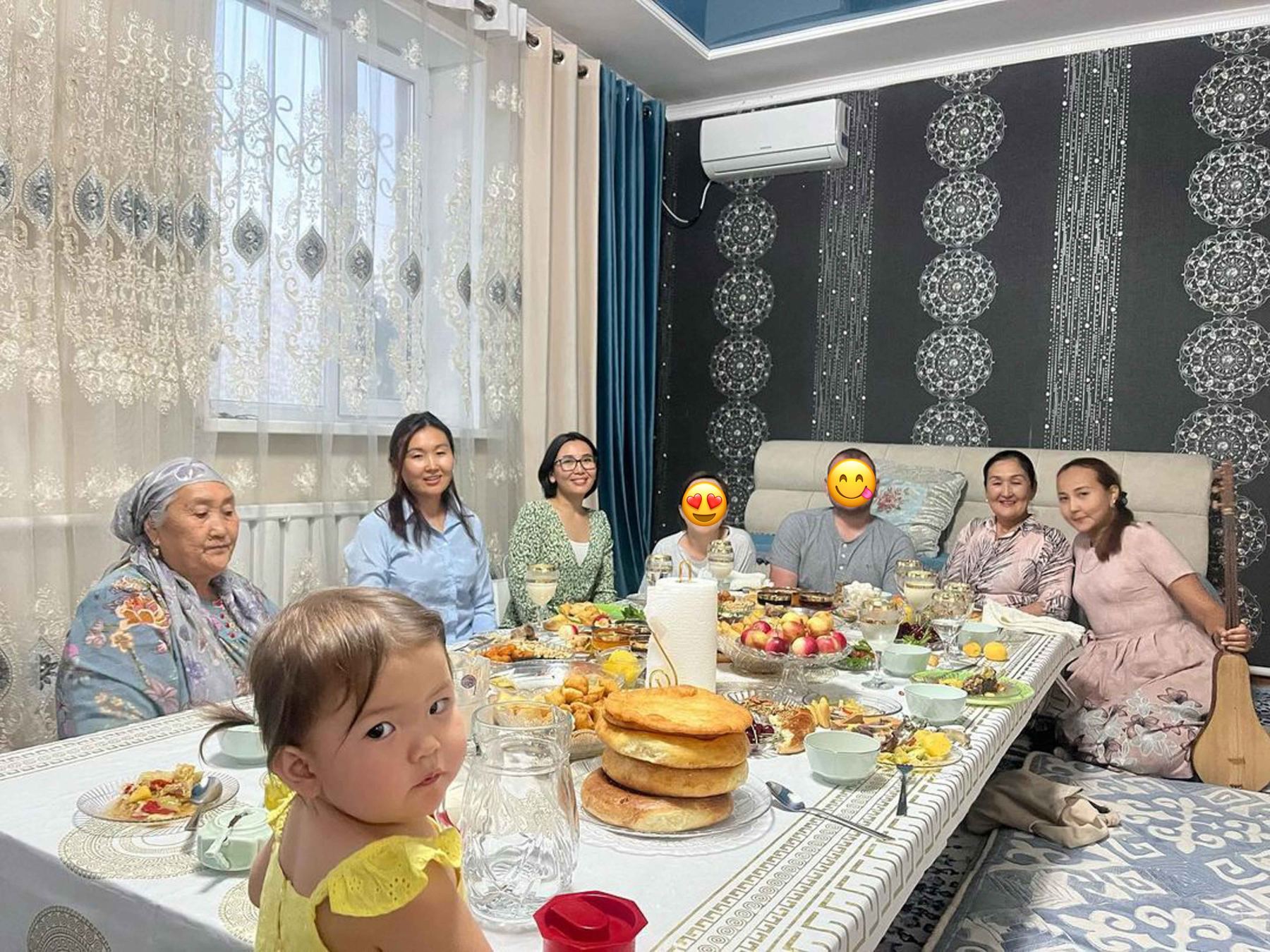
- Dastorkon: the cloth spread with food for guests, and the generous spread itself.
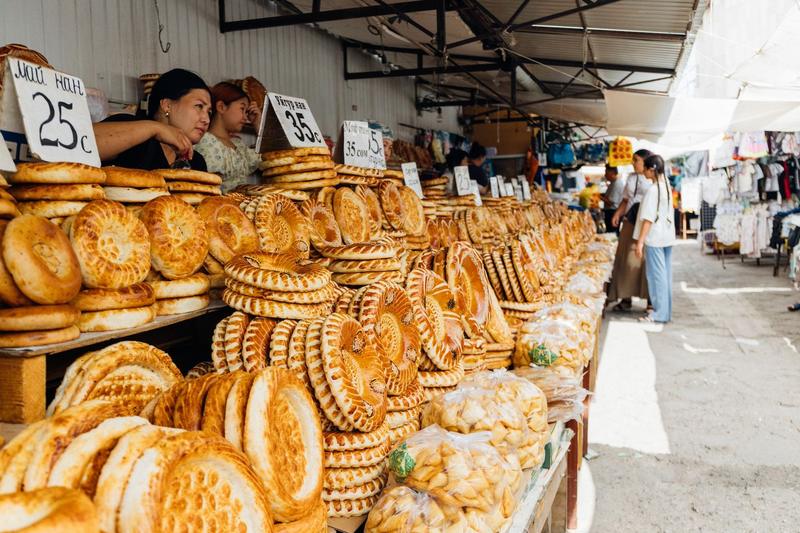
- Nan: bread. Always treated with respect.
- Chai: tea, poured often and in small amounts.
- Kymyz: fermented mare’s milk, the taste of a Kyrgyz summer.
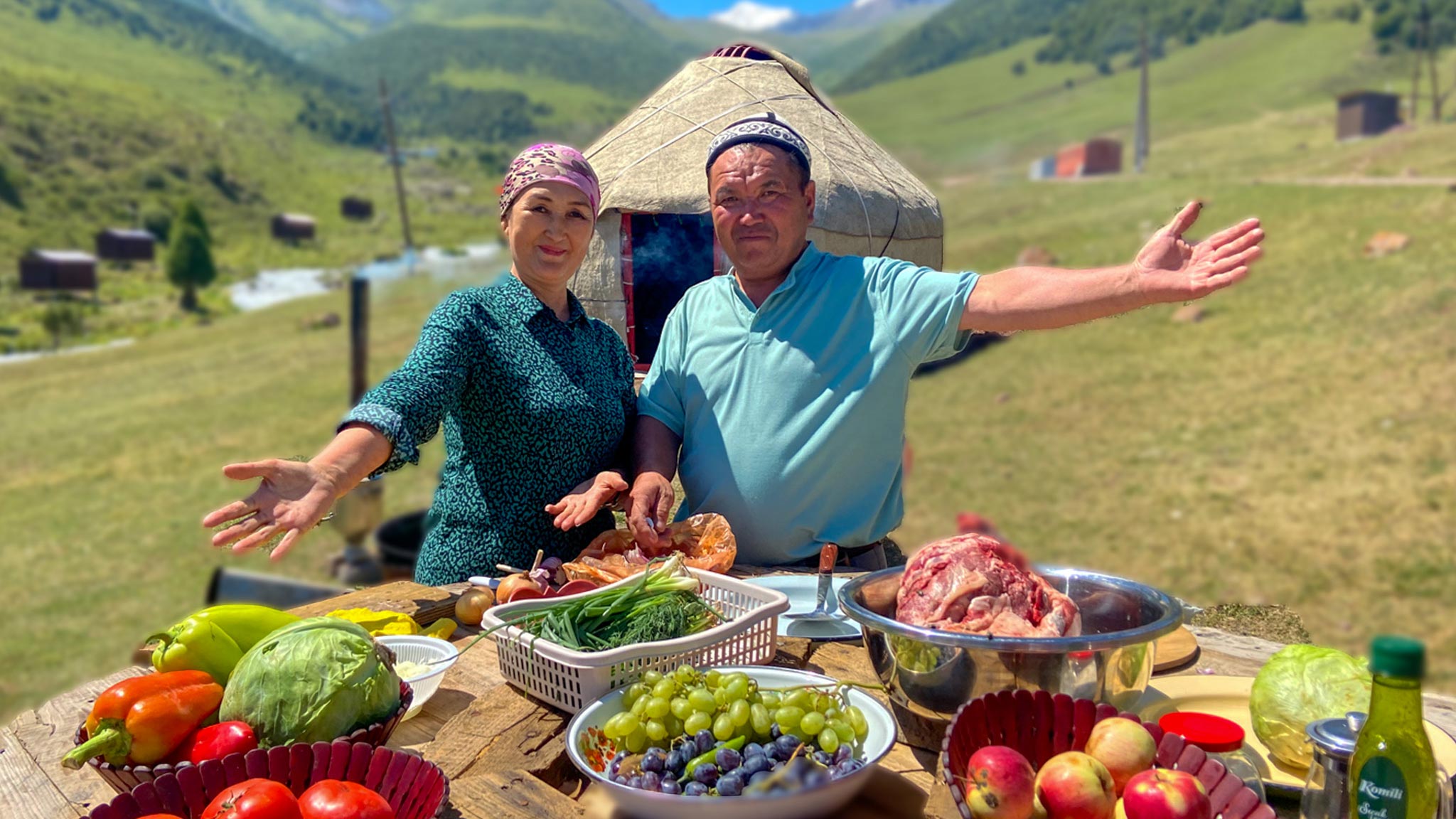
- Beshbarmak: “five fingers”, the national dish of noodles and meat.
In the mountains
- Jailoo: the high summer pasture where families take their herds.
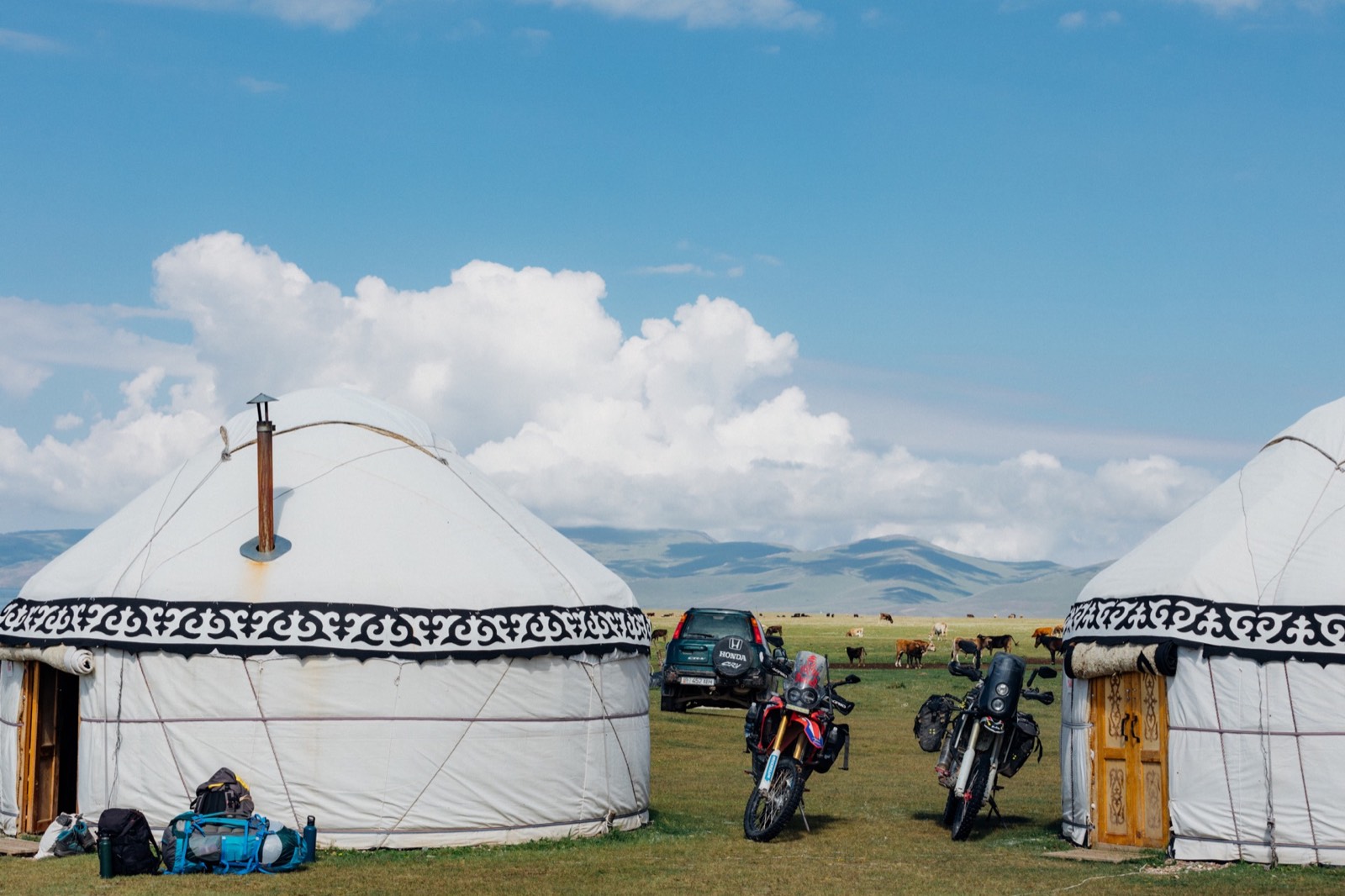
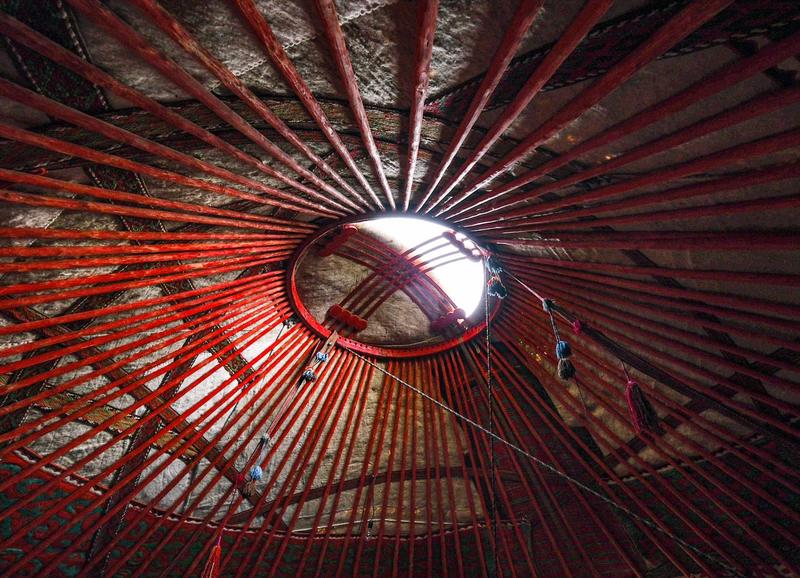
- Boz üy: a yurt, literally the “grey house”.
- At: horse. You’ll ride one.
- Too: mountain, as in Ala-Too, the “colourful mountains”.
- Köl: lake.
Read the map like a local
Once you know a few words, place names start to make sense:
✔Issyk-Kul: “warm lake”. It never freezes, even in winter.
✔Ala-Too: “colourful mountains”, the range above Bishkek, and the name of its central square.
✔Altyn-Arashan: “golden healing spring”, a valley famous for its hot springs.
✔Jeti-Oguz: “seven bulls”, after its row of red rocks.
A note on Russian
Russian is widely spoken, especially in cities, so spasibo (thank you) and zdravstvuyte (hello) also work everywhere. But a word of Kyrgyz, especially in a village or a yurt, shows real interest, and people notice.
Try one word on the first day, and by the end of the trip you’ll be greeting nomad families like old friends. Our guides are always happy to help you practise.