A golden eagle can spot movement from a remarkable distance and dive faster than any car on the road below. For centuries, Kyrgyz hunters turned that power into a partnership, one that still survives in the mountains today.
The berkutchi
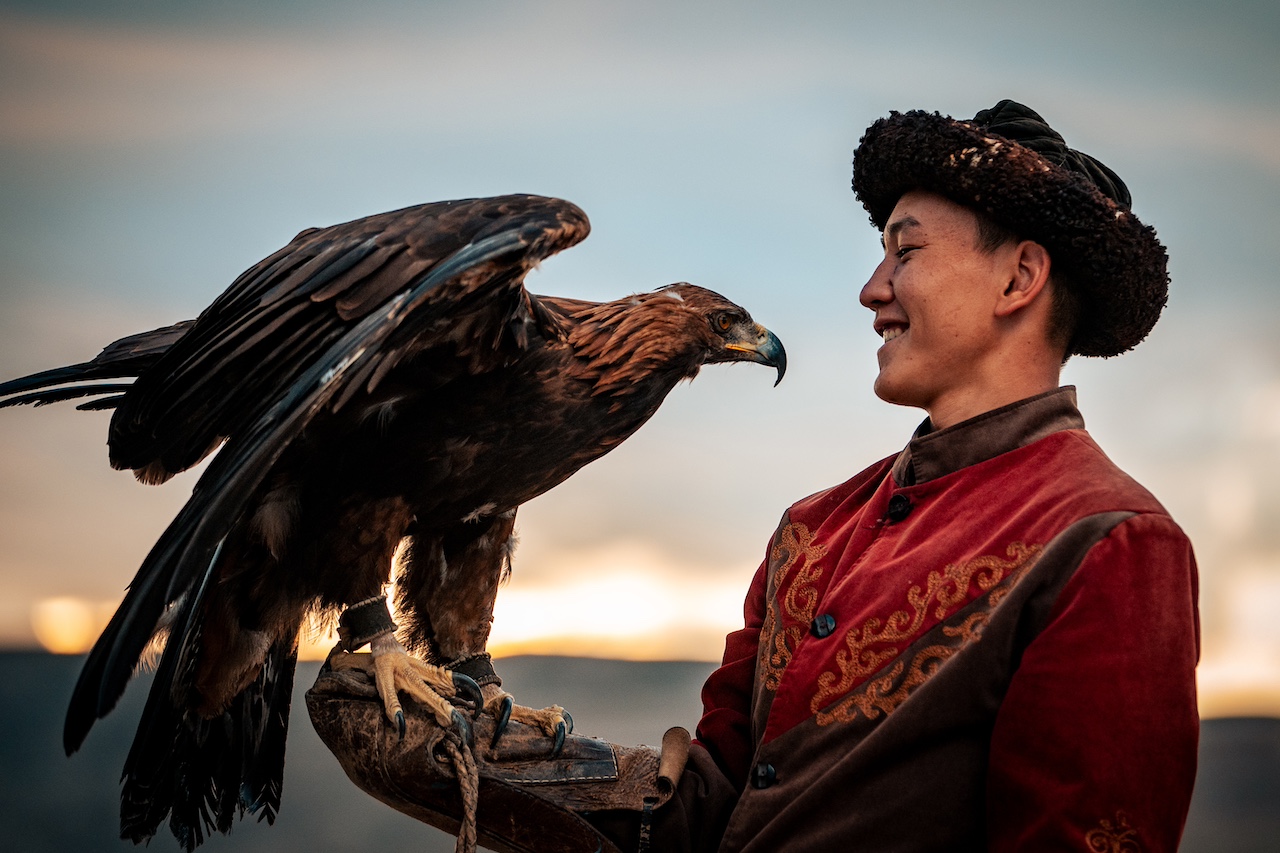
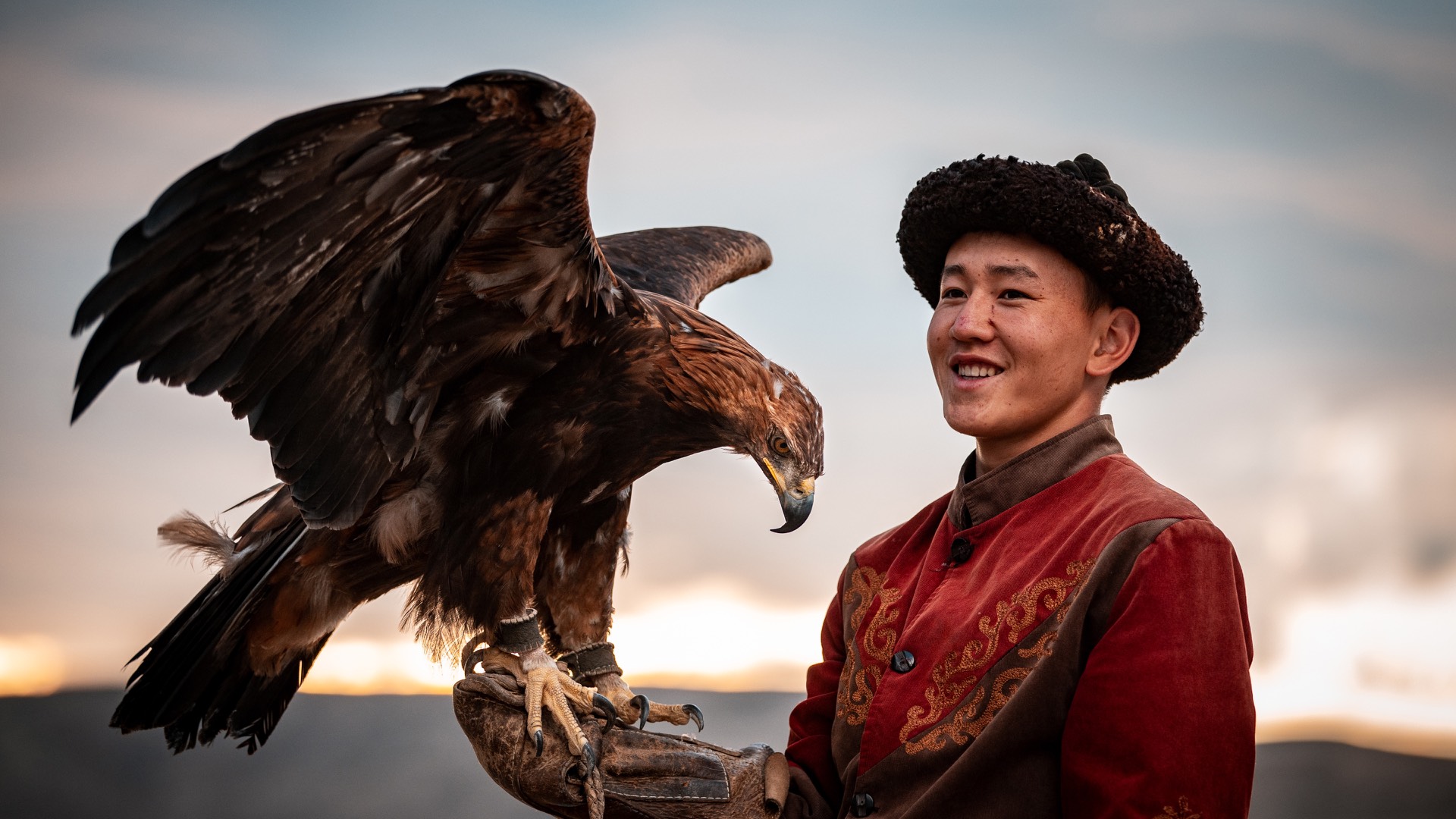
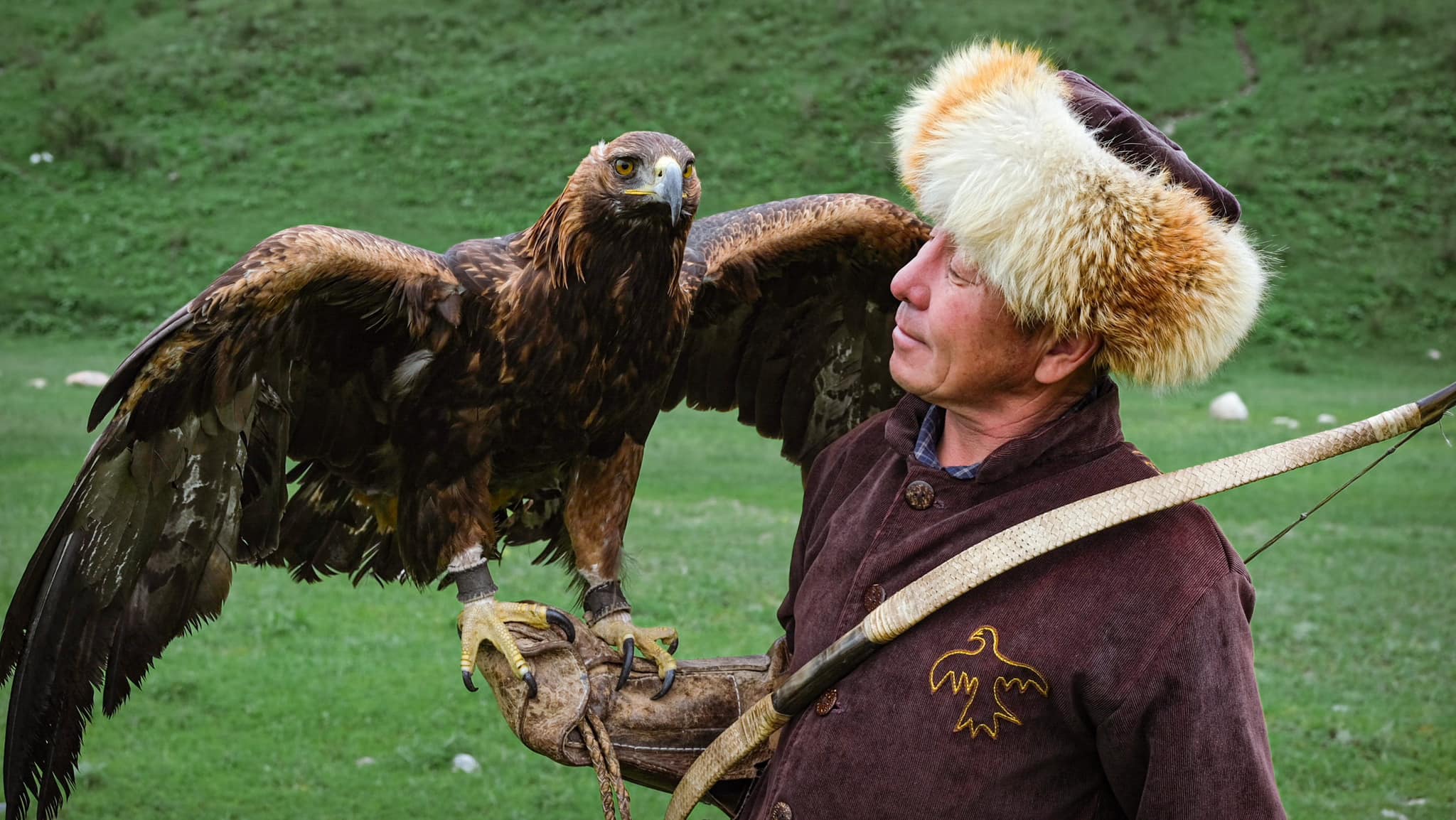
A hunter who flies a golden eagle is called a berkutchi, from berkut, the golden eagle. In winter, when snow makes tracks easy to read, berkutchi traditionally rode out to hunt foxes, hares and sometimes even wolves. Fox fur meant warm hats and coats for the family.
The skill is usually passed from father to son, and it takes years to master.
How an eagle is trained
- Patience first: the eagle must learn to trust the hunter’s voice, hand and smell, and that takes time spent together every day.
- The hood: a leather hood (tomogo) covers the eagle’s eyes to keep it calm until the moment of the hunt.
- The glove: eagles are heavy, so hunters wear a thick leather glove and, on horseback, rest their arm on a wooden support.
- The lure: training uses a fox skin pulled across the ground; the eagle learns to dive, grab and wait for its reward.
A partnership, not ownership: many berkutchi say an eagle reflects its hunter’s mood. Treat it with respect and patience, and it will return the same.
The taigan: Kyrgyzstan’s mountain hound
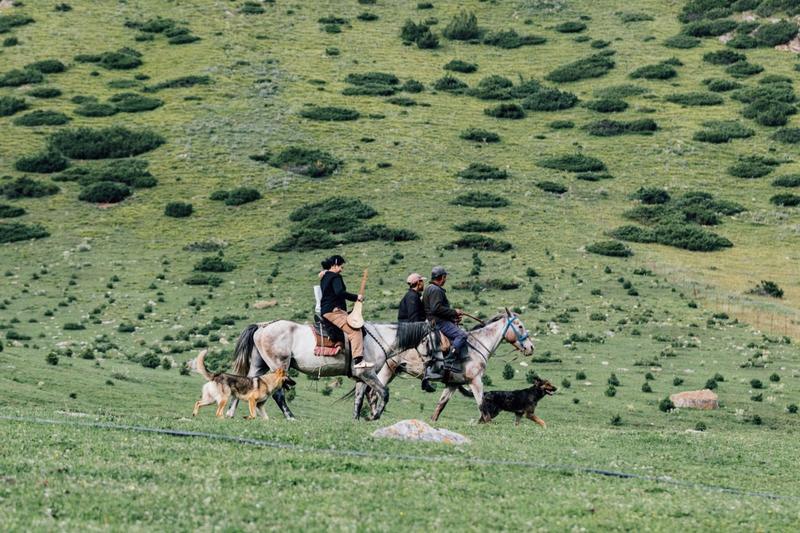
The eagle’s hunting partner on the ground is the taigan, an ancient Kyrgyz sighthound. Slim, fast and long-legged, with a thick coat for mountain winters, the taigan can run at high altitude where other dogs struggle. Eagle above, hound below: together, they made a formidable team.
Salbuurun: hunting as an art
The traditional Kyrgyz hunting arts — hunting with eagles and falcons, coursing with taigans, and archery — are known together as salbuurun. Today, salbuurun festivals bring hunters together to show their skills, and eagle hunting is one of the highlights of the World Nomad Games.
Meeting an eagle hunter
On the south shore of Issyk-Kul, around Bokonbaevo, you can meet a berkutchi and his eagle. On our tours, the hunter shows how the eagle responds to his call, flies it to a lure, and lets guests hold the bird on a gloved arm.
- Follow the hunter’s instructions at all times around the bird.
- Ask before close-up photos of the eagle.
- Keep your voice calm and your movements slow.
The moment the eagle opens its wings on your arm, you’ll understand why this tradition has lasted for centuries.